1 Nov 2026
Decoding Smart Contract Mechanics That Shape Reward Distribution in Token-Based Reel Systems
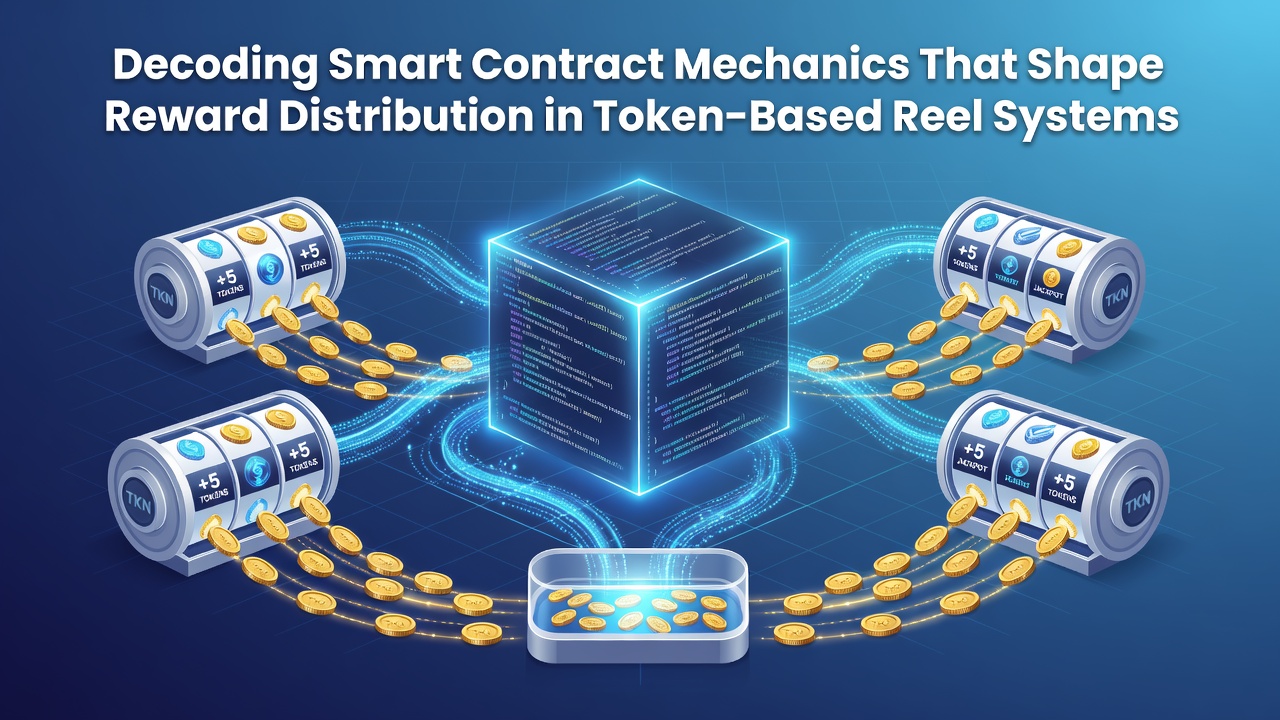
Token-based reel systems operate on blockchain networks where smart contracts manage every stage of reward allocation from initial wager acceptance through final token transfer, and these contracts encode the rules that determine how payouts reach player wallets without intermediary intervention. Developers deploy these contracts on platforms such as Ethereum and its layer-two variants so that each spin triggers an immutable sequence of checks and executions that reference player balances, token standards, and external data feeds for randomness.
Core Components of Token-Based Reel Systems
Reel systems built on tokens rely on fungible standards like ERC-20 or BEP-20 to represent both wagers and prizes, while non-fungible elements may track session states or bonus multipliers, and the smart contract holds custody of pooled liquidity until a verified outcome releases funds to the winning address. Observers note that the contract code first validates the incoming transaction, confirms sufficient token allowance, then calls an oracle service to obtain a random seed that maps to reel positions and corresponding payout multipliers.
Because the contract executes atomically, either the full distribution completes or the state reverts entirely, which eliminates partial failures that once plagued centralized servers. Data from multiple chains shows that November 2026 deployments increasingly incorporate upgradeable proxy patterns so that reward formulas can adjust to new token economics without redeploying the entire reel logic.
How Smart Contracts Handle Randomness and Outcome Mapping
Random number generation occurs through decentralized oracle networks that aggregate entropy from multiple independent sources before the contract receives a single verifiable value, and this approach prevents any single participant from predicting or manipulating reel results. The contract then applies a deterministic function that converts the seed into symbol combinations, calculates the resulting multiplier against the staked amount, and prepares the corresponding token transfer amount.
Those who audit these contracts find that reward distribution logic often includes tiered structures where base game payouts, bonus round triggers, and progressive jackpots each reference separate subroutines within the same contract, and each subroutine checks current liquidity reserves before committing tokens to the winner. In practice the contract burns or mints tokens as needed to maintain supply integrity while recording every transfer on the public ledger.
Mechanics of Reward Distribution and Escrow Logic
Escrow mechanisms inside the contract temporarily lock a percentage of each wager into a reserve pool that funds future rewards, and the code enforces release conditions such as time locks or outcome thresholds before any player can claim accumulated bonuses. Researchers have mapped these flows across several networks and observed that the same contract may route portions of the pool to treasury addresses, developer fees, and player rewards according to percentages encoded at deployment.
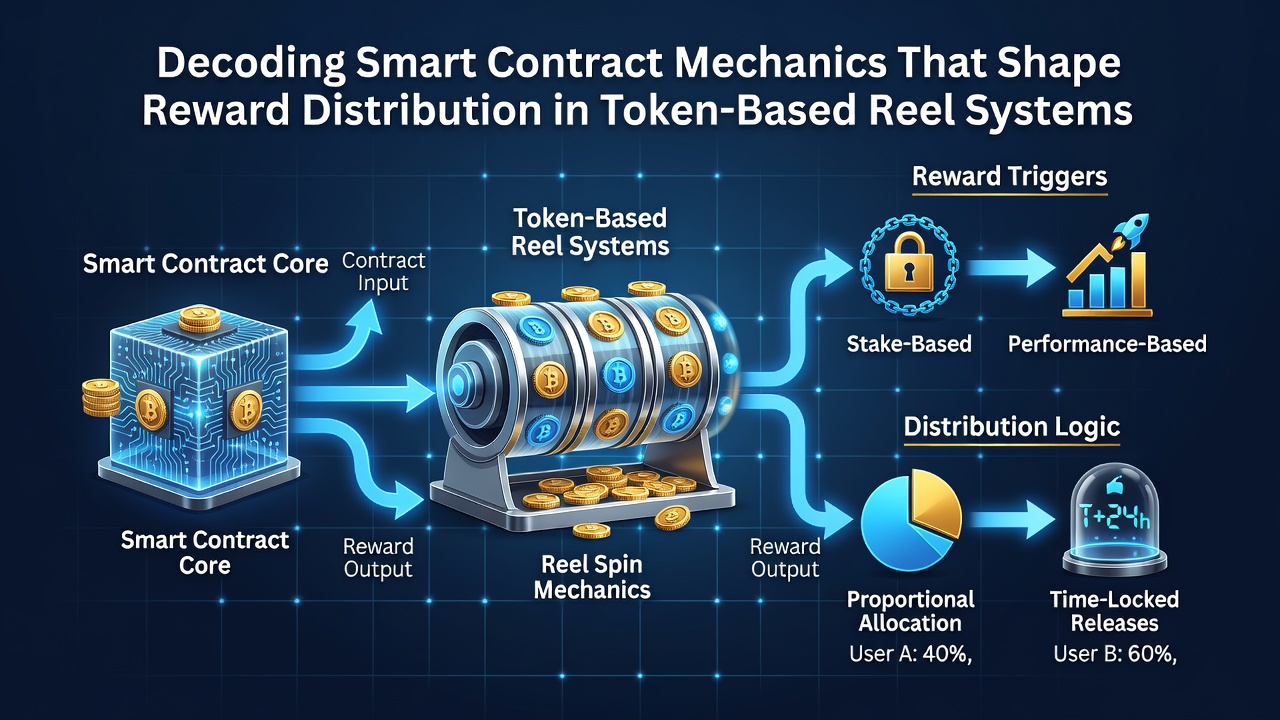
Token standards influence how quickly rewards settle because contracts that adhere to ERC-777 or similar permit callbacks during transfer, which lets the reel system trigger additional game logic such as automatic reinvestment into bonus rounds. Figures from industry monitoring groups reveal that networks with lower gas costs processed higher volumes of micro-reward distributions in late 2026, while higher-fee chains focused on larger jackpot events that justify the transaction expense.
Verification, Transparency, and Audit Trails
Every reward distribution leaves a permanent transaction record that any observer can query through block explorers or custom indexing services, and this transparency allows independent verification that the contract followed its published rules rather than arbitrary adjustments. Smart contract auditors examine the code for reentrancy vulnerabilities, integer overflows, and oracle dependency risks before deployment, yet ongoing monitoring remains necessary because new token standards or chain upgrades can alter execution costs and timing.
According to a study published by the University of Sydney on blockchain applications in gaming, contracts that separate randomness generation from reward calculation reduce attack surfaces and improve auditability across multiple jurisdictions. A separate report issued by the Canadian Centre for Gaming Innovation examined token flow patterns and found consistent use of multi-signature controls for reserve management in systems launched during 2026.
Integration of External Data and Compliance Parameters
Some contracts reference external compliance oracles that supply jurisdiction-specific parameters such as maximum payout caps or responsible gaming flags, and these inputs modify the distribution logic without requiring code changes. When a player address triggers a reward above a defined threshold the contract may automatically route a portion to a regulated escrow or generate a compliance report event for off-chain processing.
Developers continue to refine these integrations so that reel systems can operate across borders while respecting local requirements, and the modular design lets operators update only the compliance module when regulations shift. In November 2026 several networks introduced new oracle standards that lowered latency for these external calls, which in turn allowed faster resolution of high-volume reel sessions.
Conclusion
Smart contract mechanics in token-based reel systems encode the complete lifecycle of wager acceptance, randomness sourcing, outcome mapping, and reward release within a single executable framework that runs on public ledgers. The combination of standardized tokens, decentralized oracles, and auditable distribution logic produces transparent allocation processes that participants can verify independently. Continued evolution of these contracts, including proxy upgrades and refined compliance hooks, supports expanding use cases while maintaining the deterministic execution that defines blockchain-based reel environments.